Key takeaways
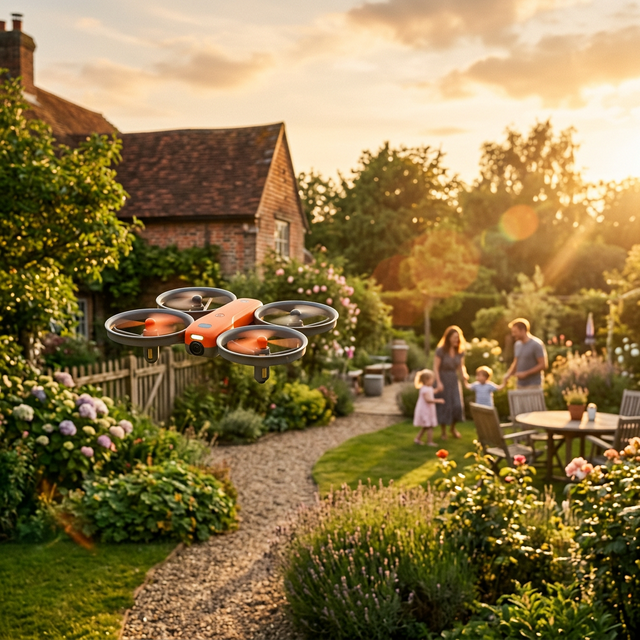
- The Aero 1 Lite was MemAero's crash-resistant beginner drone — it has been discontinued, but the durability principles it demonstrated still matter.
- Propeller guards, modular components, and breakaway designs reduce repair cost and frustration on any beginner aircraft.
- Repairability is a better long-term metric than crash resistance — a drone you can fix is more valuable than one you have to replace.
- Supervised flying for teenagers, not young children, is the right framing for a step into proper FPV — and MemAero's new aircraft are designed with that in mind.
- For younger children, well-guarded toy-class drones remain the appropriate starting point.
What crash-resistant design actually means
Materials and structure
A crash-resistant drone does not eliminate damage — it absorbs and distributes it. The key engineering choices are: flexible polymer frames that deflect rather than fracture; fully enclosed propeller guards that prevent blade contact with surfaces (and hands); breakaway motor arms that detach cleanly rather than snapping the central body; and modular propellers that pop off on hard impact rather than transmitting the force into the motor shaft.
The Aero 1 Lite used all four of these approaches. A 9-year-old flying into a wall at indoor speed would typically see the drone bounce off, the props detach and clip back on, and the session continue. That is the practical definition of crash-resistant at the beginner toy-class level.
Why the Aero 1 Lite worked for younger pilots
Propeller guards and foldable arms
For children flying indoors — low ceilings, furniture, confined spaces — the propeller guard is the single most important safety feature. It prevents blades from contacting faces, hands, and pets, and it prevents the most common cause of first-session write-offs: a rotor strike against a doorframe or wall corner that cracks a blade and grounds the drone permanently.
The Aero 1 Lite's foldable arm design added a second layer: on lateral impacts, the arms would fold under load, absorbing energy rather than transmitting it into the central PCB. For a child's first 20 flights, this design saved both the drone and the experience.
Why repairability matters more than crash resistance
Crash resistance reduces the frequency of damage. Repairability determines what happens when damage occurs anyway — because it always will eventually.
On a toy-class drone, repairability typically means being able to order replacement propellers and prop guards from the manufacturer. On a proper FPV drone, it means something more significant: motors, ESCs, flight controllers, and frames are all individually replaceable using standard hardware, standard tools, and parts available from multiple suppliers. A crash that would write off a sealed consumer drone can be repaired for a few pounds of parts and an afternoon's work on a modular FPV build.
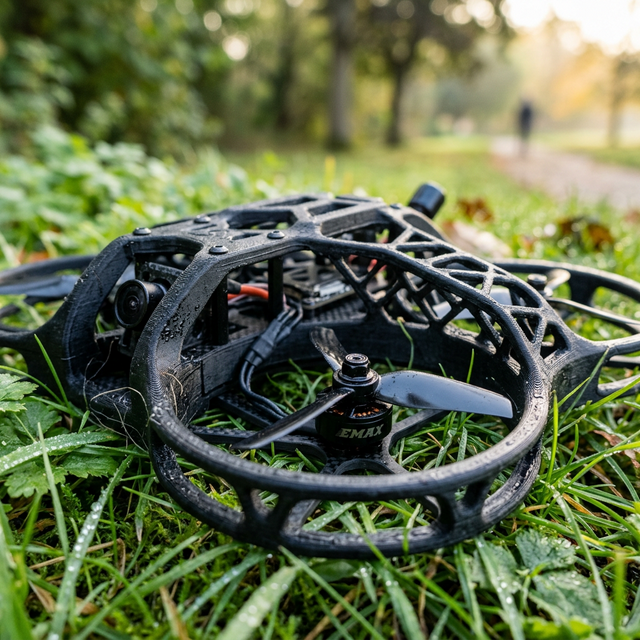
This is part of why MemAero's new aircraft — the Aero 2 and Aero 3 — are designed to be repairable from the outset. Designed and built in Lancaster, both use open ArduPilot firmware and modular construction specifically so that owners can maintain and fix their own aircraft rather than sending them back to a manufacturer or discarding them.
The age and supervision question: child vs teenager
The Aero 1 Lite was appropriate for children as young as 7 or 8 under close adult supervision. Its slow-speed mode, GPS hover, and physical safety features made it genuinely manageable for young users in a garden or large indoor space.
The step into FPV — the category MemAero now occupies — is different. FPV drones are faster, heavier, do not have obstacle sensing, and require meaningful situational awareness to fly safely. The right age framing is not young children but supervised teenagers: 14 and older with adult oversight is a reasonable starting point for an entry-level FPV aircraft.
The learning curve is real. A teenager who has grown up on simulators and has solid hand-eye coordination can progress quickly. A child who has not yet developed spatial reasoning may find it frustrating and unsafe. The two categories are not comparable, and treating FPV as a natural next step from a toy drone for all ages would be misleading.
For a fuller picture of what FPV entry looks like for a teenager, see our guide to the best drone for a teenager in the UK, which covers the realistic requirements, costs, and supervision considerations honestly.
Drone safety fundamentals for any first-time pilot
These apply regardless of age or aircraft class:
- Start outdoors in open space — even with crash-resistant aircraft, first flights indoors in confined spaces increase crash frequency dramatically.
- Use slow-speed mode for the first sessions — always available on beginner aircraft, frequently ignored, invariably regretted when skipped.
- Keep fingers clear of propellers even when the drone is landed — motors can spin up unexpectedly during arming or connection sequences.
- Never fly near people who have not consented to be near the aircraft — UK Drone Code requirement, applies at all ages.
- Charge batteries safely and store them correctly — LiPo fires are preventable; the habits are simple.
From the Aero 1 Lite to MemAero's FPV direction
MemAero no longer makes the Aero 1 Lite. For parents looking for a crash-resistant drone for a young child, the best current options are toy-class drones from manufacturers such as Holy Stone or Ryze — well-guarded, inexpensive, and appropriate for the age group.
For a supervised teenager who is serious about learning to fly properly, MemAero's new Aero 2 is designed as an entry into real FPV: 5-inch freestyle, beginner-friendly tuning out of the box, repairable when it crashes (and it will crash), and built in the UK. It is a more considered purchase — not a casual gift — and it comes with the expectation of time invested in simulator practice before the first real flight.
The waitlist is open. If you want to understand what is involved before committing, our getting-started guide is the right place to begin.
MemAero has moved to UK-made FPV
The Aero 2 and Aero 3 are designed and built in Lancaster — programmable, repairable, and ownable. Founders pricing and a free spare battery for waitlist members.
Join the waitlist →Frequently asked questions
How does a crash-resistant drone protect children during flight?
Through a combination of enclosed propeller guards (preventing blade contact with surfaces and hands), flexible polymer frames that absorb rather than fracture on impact, breakaway motor arms, and modular propellers that detach cleanly rather than cracking. The result is a drone that survives first-session crashes and keeps the child flying rather than grounded by a broken prop.
Are crash-resistant drones suitable for complete beginners?
Yes — toy-class crash-resistant drones are specifically designed for the mistakes beginners make. They are the appropriate starting point for younger children under supervision. The step into proper FPV — which is not crash-resistant in the same toy sense — is more appropriate for supervised teenagers with simulator time logged first.
At what age can a teenager start flying FPV?
There is no strict legal age minimum for flying FPV in the UK under direct supervision, but 14 and above is a practical threshold given the coordination and spatial awareness required. Simulator practice is strongly recommended before a first real FPV flight regardless of age. See our teenager drone guide for a fuller breakdown.
What safety features should I look for in a beginner drone for a child?
Fully enclosed propeller guards; slow-speed or beginner mode; GPS-assisted hover or altitude hold; return-to-home function; lightweight construction (reduces injury risk on contact); and modular, replaceable propellers. Obstacle sensing is a bonus but not universal in affordable classes.