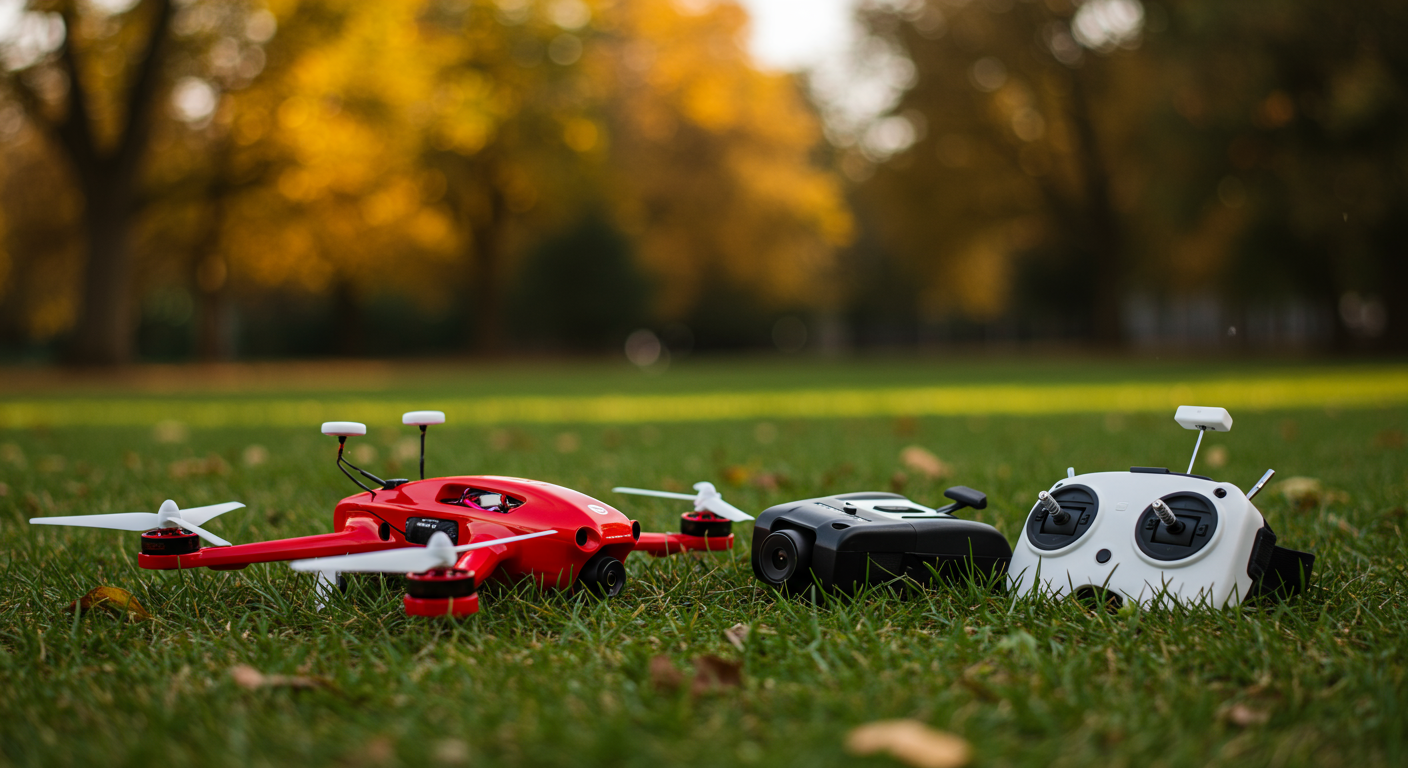
The best drone for a teenager in the UK is not the cheapest one you can find — it is the one they will still be flying six months from now. Based on age and ability, the right choice sits somewhere between a supervised first flight on a capable recreational drone and a properly registered FPV setup they can grow into. UK rules require a free CAA Flyer ID for pilots aged 13 and over, and a CAA Operator ID for any drone over 100 g — both free to obtain. For under-13s, an adult must supervise every flight and hold the registrations. Buying a capable, repairable drone from the outset is more cost-effective and more rewarding than a string of disposable toys.
UK age rules every parent needs to know
The UK's drone rules draw one firm line at age 13. From that birthday, a young person can register for a CAA Flyer ID in their own name by taking the free online theory test — 40 multiple-choice questions covering safety, airspace, and the drone code. Below 13, a child can fly only under the active, physical supervision of an adult who holds their own Flyer ID. The drone itself must be registered under a CAA Operator ID regardless of age, and the operator must be 18 or over if the child does not legally own the drone. There is no practical flight test, no medical requirement, and no minimum age for supervised flying. In practice this means a motivated 10-year-old can fly a proper FPV drone in the back garden with a parent alongside, and from 13 they can handle the full registration process independently. The MemAero FAQ covers these age rules in more detail alongside common questions about registration and legal flying in the UK. Full registration details are available on the CAA drone registration portal, and the full set of rules is published in the UK Drone and Model Aircraft Code.
Why a repairable FPV drone beats a disposable toy
Every parent who has bought a cheap indoor toy drone will recognise the pattern: it arrives, gets flown, hits a wall, and six weeks later one of the props is cracked or the battery connector is broken and the whole thing goes in a drawer. Capable drones designed to be repaired change that entirely. FPV frames can be rebuilt after crashes. Props — the first thing to break — cost a few pounds for a pack of four. Motors, ESCs, and flight controllers are user-replaceable with basic soldering skills. A teenager who crashes a £30 toy learns nothing; a teenager who crashes a 5-inch FPV drone, identifies the broken prop, orders a replacement, and is back in the air by the weekend learns fault-finding, mechanical confidence, and the satisfaction of fixing something. The MemAero Aero 2 is designed around this principle — open ArduPilot firmware, user-accessible components, and a support community built around fixing and modifying rather than replacing.
Safety features to look for (and what they actually mean)
Marketing copy for consumer drones is full of safety feature names that sound reassuring but vary wildly in quality. Here is what matters in practice for a teenage pilot. Position Hold (sometimes called GPS Hold or Loiter) uses GPS to hold the drone in one spot when the pilot releases the sticks — this is the single most important beginner safety feature because it removes the constant small corrections that overwhelm new pilots. Return to Home (RTH) sends the drone back and lands at the launch point if signal is lost or battery is critically low — useful but not a substitute for flying within visual range. Altitude hold (barometer-based) maintains height without GPS; it is better than nothing but drifts in wind. Beginner mode limits maximum speed and tilt angle — good for first flights. What to ignore: most obstacle avoidance on budget drones works only in very specific conditions and creates a false sense of security. Teach the teenager to fly with spatial awareness rather than relying on sensors.
Ready-to-fly vs proper FPV — making the call
The honest answer depends on the teenager's interest level and your tolerance for involvement. A ready-to-fly consumer drone (think DJI Mini or similar) is simpler to get airborne, has a polished app interface, and asks almost nothing of the pilot technically. It is the right choice for a casual interest in aerial photography where the flying is secondary to the footage. A proper FPV drone requires a radio controller and FPV goggles as separate kit, takes longer to learn, and involves more crashes — but it is an entirely different and much more engaging activity. FPV flying is closer to a sport than photography. For a teenager who shows genuine interest in the technical side, in fast flying, in understanding how things work, an FPV setup with a simulator to learn on first is a better long-term investment. The MemAero drone range sits firmly in the capable FPV category — built for pilots who want to understand and own their aircraft, not just fly within an app's envelope.
This buying guide video gives a useful overview of the FPV drone landscape before committing to a setup:
What to budget, what to buy first
For a first proper FPV setup in the UK (2026 pricing), expect to spend roughly in three tiers. Starter: a simulator (Liftoff or Velocidrone, around £15–20 on Steam), a budget radio controller with USB connection (around £30–60), and fly in-sim for at least a month before spending more. Step up: add FPV goggles when simulator skills are solid — entry-level digital goggles (DJI Goggles N3 compatible) represent a significant investment but the image quality jump over analogue makes learning easier. First drone: a 3-inch or 5-inch RTF FPV drone with a spare battery and a set of props. Buying used gear from the FPV community is a sensible approach for first purchases given the inevitable early crashes. MemAero is currently in the pre-launch phase — waitlist members receive founders pricing and a free spare battery with their first order, which meaningfully changes the economics of that first proper drone. See our guide to getting started in FPV for a full beginner path from simulator to first outdoor flight.
The grown-with-them option
One underrated consideration when buying a drone for a teenager is what happens in 18 months when the novelty of a toy has faded. A capable FPV drone with open firmware and user-upgradeable hardware does not become obsolete — it becomes a platform. The MemAero Aero 2 runs ArduPilot, the same open-source firmware used on research UAVs and professional aerial platforms. A teenager who starts with basic flying can progress to autonomous waypoint missions, PID tuning, custom flight modes, and eventually full mission planning — all on the same aircraft. That progression path does not exist on a locked-down consumer drone. The repairability matters here too: MemAero drones are designed to be serviced, not replaced, so a drone bought as a 14th birthday present can still be flying (and more capable) when that same pilot turns 17.
Frequently asked questions
Is a drone a good gift for a teenager in the UK?
Yes, for the right teenager. A drone is an excellent gift for a young person interested in technology, flying, engineering, or photography. The key is matching the type of drone to their interest level — a casual interest suits a simple camera drone, while a teenager who wants to understand how things work will get far more from an FPV setup they can repair and modify.
What age can a teenager fly a drone in the UK?
There is no minimum age for supervised flying. From age 13, a young person can hold their own CAA Flyer ID by passing the free online theory test. Under 13, an adult must be present and supervising every flight, and the drone must be registered under an adult Operator ID.
Do I need to register a drone bought as a gift for my child?
Yes, if the drone weighs more than 100 g. You register as the Operator (the owner or person responsible for the aircraft) via the CAA's free online portal and pay an annual fee of £10.33. Your child (if 13+) registers separately for their own Flyer ID. If they are under 13, you hold both registrations and supervise all flights.
What is the best drone for a 13-year-old in the UK?
At 13, with a CAA Flyer ID in hand, a capable beginner FPV drone on a simulator first is the most rewarding path. Start with a free or low-cost FPV simulator, add a USB radio controller, spend a month learning, then progress to a real 3-inch or 5-inch RTF FPV drone. This approach produces a much better outcome than buying a drone first and crashing it before the skills are there.
How do I know if an FPV drone is safe enough for a teenager?
Safety in FPV is mostly about the pilot's skill and awareness, not features on the drone. Position Hold (GPS loiter) is the most useful safety feature for beginners. Beyond that, flying in open areas away from people, starting on a simulator, and flying with adult supervision for the first outdoor sessions is more effective than any electronic safety system.
Can a teenager fly FPV with goggles legally in the UK?
A teenager aged 13+ with a Flyer ID can fly FPV legally, but flying exclusively through goggles without a visual observer watching the drone directly is technically Beyond Visual Line of Sight (BVLOS) and requires a CAA exemption. The simple compliant approach is to fly with an adult alongside who watches the aircraft with unaided eyes throughout the flight.