In This Article
- The Aero 3 Lite is discontinued — this is an honest feature retrospective
- What its camera, GPS, flight modes, and battery actually delivered
- How its feature set compares to the budget drone market in 2025
- Whether the drone tech was genuinely worth the price for UK buyers
- What MemAero builds today — and why it is a different product category entirely
Is the Aero 3 Lite Still Worth Buying?
The Aero 3 Lite is no longer in production. MemAero does not supply spare parts or provide warranty support for it. If you encounter it for sale today it will be remaining retail stock or secondhand. That context shapes the honest answer to whether the drone tech is worth the price in 2025: it depends on what you find it for and what you need it for.
At launch, the Aero 3 Lite represented solid value for a first drone — the feature list was longer than most in its class. In 2025, budget drone technology has moved on, and the same budget buys more. That does not mean the Aero 3 Lite is a bad purchase secondhand at the right price, but it does mean it is not the right starting point for anyone serious about progression into FPV or content creation.
1. Design and Build
Lightweight Yet Practical Construction
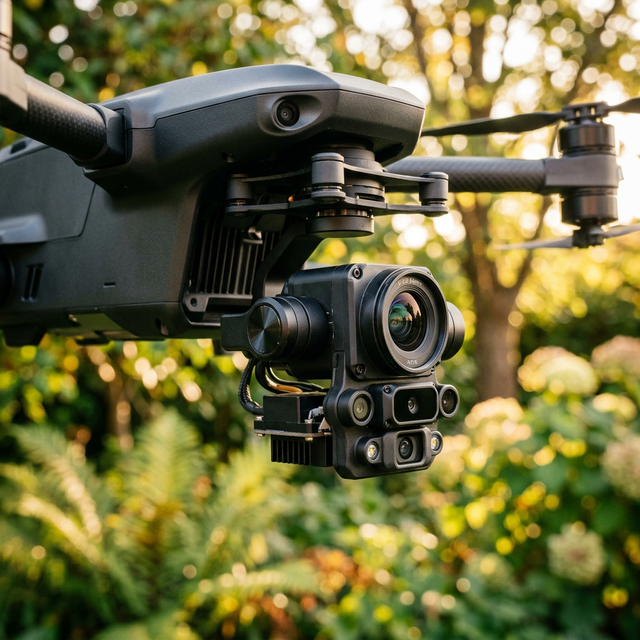
The Aero 3 Lite was built from reinforced polycarbonate in a foldable form factor. Weighing just under 250g, it was portable and physically robust for its price point. The matte finish reduced glare in flight, and the folded footprint was small enough for a backpack side pocket.
One note for UK operators: the relevant CAA registration threshold is 100g, not 250g. Any drone above 100g flown in the UK requires the operator to hold a CAA Operator ID and the pilot to hold a Flyer ID. The Aero 3 Lite's weight placed it firmly in registered-operator territory despite common marketing claims about being registration-free.
2. Camera Quality and Imaging
4K in a Budget Drone — What That Actually Meant
The headline feature was genuine native 4K capture. The source sensor recorded at 3840×2160, which is not interpolated upscaling — a meaningful distinction at the budget end of the market, where many competitors faked the resolution claim.
The caveats: frame rate was limited, and there was no mechanical gimbal — only electronic image stabilisation. In good light with slow, deliberate movement, footage was genuinely usable for social media and personal projects. Still photography was clean at 12MP. The wide-angle lens covered a broad field of view, well-suited to landscape and property shots.
What it could not do: cinematic motion footage, low-light shooting, or the kind of stabilised output you would get from a dedicated FPV drone with DJI digital video. For buyers comparing then versus now, the step from budget drone camera quality to what the new MemAero Aero 3 delivers via DJI O4 is substantial.
3. Flight Performance and Stability
The Aero 3 Lite used GPS plus GLONASS dual-satellite positioning, which gave it reliable hold in open outdoor environments. Altitude hold and auto-hover worked consistently. A set of intelligent flight modes — including Orbit, Follow Me, and Waypoint Pathing — added genuine creative capability for the price point.
In typical UK conditions, it handled light-to-moderate winds adequately. It was not a drone for blustery coastal sessions or exposed hillsides, but for park flying and calm open spaces it was dependable. Top speed of around 30 km/h gave enough agility for interesting shots without demanding advanced pilot skill.
4. Ease of Use for Beginners
Beginner accessibility was one of the Aero 3 Lite's strongest attributes. Auto take-off, auto landing, and return-to-home all functioned reliably. GPS hold meant the drone stayed where you pointed it without constant input correction. The controller was ergonomic; the companion app covered live FPV feed, telemetry, and flight mode switching from a single screen.
For someone who had never flown a drone before, the learning curve was genuinely gentle. Most users reported feeling confident after two outdoor sessions. That low barrier to entry was the core of its value proposition — and it is also why many Aero 3 Lite pilots eventually wanted more from their aircraft.
If that sounds familiar and you are now thinking about stepping up, how to get started in FPV in the UK walks through the realistic path from beginner GPS drone to proper FPV flying.
5. Battery Life and Charging
The modular 2500mAh lithium-polymer battery delivered up to 25 minutes under ideal conditions — above average for its class. Real-world sessions in moderate wind or with sustained video recording typically landed at 18–20 minutes. The modular design meant battery swaps took seconds, and charging via Type-C took approximately 90 minutes.
Spare batteries were readily available at launch. Availability of genuine spare batteries for the discontinued Aero 3 Lite is now limited — another practical reason to factor discontinuation into any secondhand purchase decision.
6. Navigation and Control
The navigation suite was the most technically impressive part of the Aero 3 Lite's feature set. GPS-led telemetry integrated with the app to enable tap-to-fly, waypoint routing, and geofenced flight perimeters. Obstacle detection used ultrasonic and visual position sensors in coordination. Headless mode and altitude hold covered most edge cases for less experienced pilots.
Gesture-based capture — triggering a photo or video clip with a hand signal — was a niche but functional feature that proved consistently reliable in good light conditions.
7. Comparison to Budget Drone Competitors
At its launch price, the Aero 3 Lite held its own well against the Holy Stone HS720E and Potensic Dreamer Pro. It offered a more rounded package than either in terms of ease of use and camera capability for the money. It was never a DJI competitor — that comparison was always a stretch in terms of sensor quality, build standard, and flight ceiling.
In 2025, the budget drone market has matured further. If you are buying new today, compare carefully on sensor specs, not headline resolution, and factor UK-specific things like spare parts availability, warranty terms, and whether the manufacturer has a UK support presence.
8. Was the Aero 3 Lite Worth the Price?
At launch, yes — for its intended audience. The feature-to-price ratio was strong for a beginner's first aircraft. For anyone beyond the beginner stage, or for anyone who knew they would want to progress into freestyle, racing, or cinematic FPV flying, the Aero 3 Lite was always a stepping stone rather than a destination.
That is not a criticism — stepping-stone drones serve a real purpose. But it is worth being honest that the tech ceiling was always low, and the gap between budget GPS drones and proper FPV aircraft is significant. The question of whether drone tech is worth the price depends entirely on what you are trying to do with it.
What MemAero Builds Now
The Aero 3 Lite has been succeeded by the all-new MemAero Aero 3 — a UK-made 7-inch FPV drone designed and built in Lancaster. It runs open ArduPilot firmware, carries DJI O4 digital video, uses a sealed slide-in smart battery shared with the Aero 2 freestyle drone, and is built to be repaired rather than replaced.
These are not budget drones. They are not marketed as beginner toys. They are serious FPV aircraft for pilots who want to own their equipment properly — programmable, repairable, and made in the UK. Pricing is via the waitlist.
MemAero has moved to UK-made FPV
The Aero 2 and Aero 3 are designed and built in Lancaster — programmable, repairable, and ownable. Founders pricing and a free spare battery for waitlist members.
Join the waitlist →Frequently Asked Questions
What are the standout features of the Aero 3 Lite?
The Aero 3 Lite's strongest features were its native 4K camera, GPS plus GLONASS dual-satellite navigation, intelligent flight modes including Follow Me and Waypoint Pathing, and a beginner-accessible control system. Its modular battery and foldable build made it practical for casual use. It has since been discontinued by MemAero.
Is the Aero 3 Lite worth buying in 2025?
The Aero 3 Lite is discontinued, so any purchase today is secondhand or remaining stock with no manufacturer warranty. At the right secondhand price it remains a capable first drone for casual use — but budget drone technology has progressed, and the same money buys more capability from current alternatives.
How does the Aero 3 Lite compare to the new MemAero Aero 3?
They are different product categories. The Aero 3 Lite was a sub-250g budget GPS drone aimed at beginners. The new MemAero Aero 3 is a UK-made 7-inch FPV drone with DJI O4 video, ArduPilot firmware, and a repairable build — designed for experienced pilots and creators. They do not compete directly.