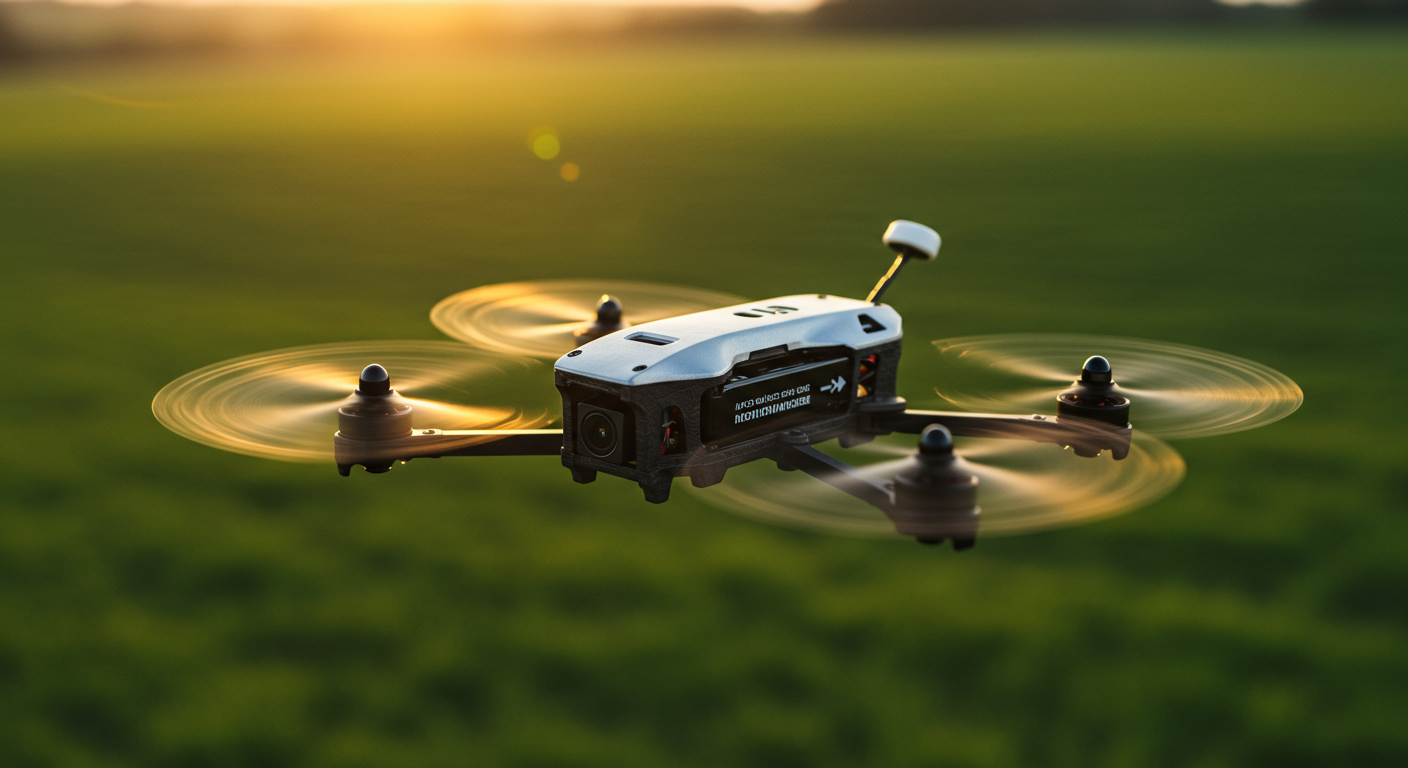
If you are searching for a DJI Avata alternative in the UK — or a DJI Neo alternative — there are now three realistic options: stay within the DJI ecosystem, choose a Chinese-manufactured BNF freestyle quad, or pick a UK-made, fully repairable FPV drone such as the MemAero Aero 2 or Aero 3. The right answer depends on whether you want a closed, polished experience or an open, ownable platform you can repair, reprogram, and keep flying for years.
What the DJI Avata 2 and DJI Neo do well
The DJI Avata 2 and DJI Neo are genuinely excellent products, and it would be dishonest to pretend otherwise. DJI's motion controller and goggle integration is the most refined beginner experience in FPV: obstacle sensing, stabilised footage straight out of the box, and a support network that spans every high street electronics retailer in the UK. The Neo in particular is astonishingly small and light — around 135g — though, like any drone over the UK's 100g registration threshold, it still needs a free CAA Operator ID before its first flight. If your only goal is smooth cinematic selfie footage and you have no interest in learning the craft of FPV, DJI wins on convenience. The Avata 2 adds a proper FPV feel with its immersive goggles, and the image quality at its price point is hard to argue with. These are the honest strengths you should weigh.
Where a UK-made open FPV drone is different
The fundamental difference between a DJI FPV product and an open-platform drone is ownership. DJI locks the firmware, the flight controller, and the transmission system into a single proprietary stack. When DJI discontinues a product, support ends on their schedule, not yours. A drone running open ArduPilot firmware — as both MemAero models do — can be updated indefinitely by the community, customised with QGroundControl, and tuned to your flying style without waiting for a manufacturer to unlock features. The Aero 2 and Aero 3 also use a sealed slide-in rear battery — similar in concept to the Avata's integrated approach — rather than bare LiPo packs held on with velcro, which means safer storage, faster swaps, and a much tidier platform. Where MemAero is built and repaired in Lancaster, a warranty repair is a domestic parcel, not an international RMA.
The common misspelling: "dji avatar alternative"
A large number of UK searches are entered as dji avatar alternative (with an "r") rather than Avata — Google groups these together as the same intent cluster, and rightly so. Whether you typed avatar or avata, you are almost certainly looking for a compact, goggles-compatible FPV drone that feels immersive and does not require building from scratch. The same comparison applies either way: DJI's closed ecosystem versus an open, repairable alternative. The MemAero Aero 2 at 5 inches and approximately 450 g, or the Aero 3 at 7 inches and approximately 720 g, both sit above the 100 g CAA registration threshold — so you will need a free CAA Flyer ID and Operator ID, as you would with the Avata 2. Registration is free and takes about twenty minutes online.
Specs side-by-side: Avata 2, Neo, Aero 2, Aero 3
| Feature | DJI Neo | DJI Avata 2 | MemAero Aero 2 | MemAero Aero 3 |
|---|---|---|---|---|
| Size | ~135 mm | ~180 mm | 5" (approx. 225 mm) | 7" (approx. 300 mm) |
| Weight | <250 g (no reg required) | >250 g | ~450 g | ~720 g |
| Video | 4K/60fps | 4K/60fps | 4K/60fps | 4K/120fps 10-bit |
| Flight time | ~20 min | ~23 min | up to 21 min | up to 17 min |
| Firmware | Closed (DJI) | Closed (DJI) | Open ArduPilot | Open ArduPilot |
| Battery | Integrated | Sealed slide-in | Sealed slide-in rear | Sealed slide-in rear |
| Repairable | Limited | Limited | Yes — made in Lancaster | Yes — made in Lancaster |
| Link | DJI O4 | DJI O4 | ELRS + DJI O4 | Dual-band ELRS + DJI O4 Pro |
Who should choose the DJI route — and who should not
If you want the easiest possible first flight — tap-to-fly, built-in stabilisation, no configuration — the DJI Neo or Avata 2 remains the honest recommendation. They are not overpriced for what they deliver. The Neo is also worth considering for parents buying for a teenager who is not yet ready to register a drone or manage a full FPV setup. The case for an open FPV alternative grows when you want more than one product's lifespan of support, when you care about reprogramming waypoints or autonomous missions via QGroundControl, when a UK warranty and domestic repair matter to you, or when you want to understand your aircraft rather than simply operate it. If you are interested in the MemAero drone range, the MemAero FAQ covers CAA rules, repairs, and what open firmware actually means in practice — worth reading before you decide.
Where to watch before you decide
The video below is an independent comparison of the DJI Neo and DJI Avata 2 — it covers the use cases honestly and is a useful reference before making a purchase decision in either direction.
Frequently asked questions
Is the DJI Neo under the UK registration threshold?
Yes. The DJI Neo weighs under 250 g, but the UK CAA registration threshold is 100 g — not 250 g. Any drone over 100 g requires a free CAA Flyer ID and Operator ID regardless of weight category. Always check the current CAA guidance before flying.
What is a DJI Avata alternative for UK buyers?
Realistic alternatives include open-platform freestyle quads from iFlight or GEPRC, or a UK-made option such as the MemAero Aero 2 or Aero 3. The key trade-off is DJI's polished ecosystem versus open firmware, repairability, and domestic support.
What does "dji avatar alternative" mean — is it the same as Avata?
Yes. "DJI avatar" and "DJI Avata" refer to the same product — the misspelling is extremely common in UK searches. If you searched for a dji avatar alternative uk, the same comparison and alternatives apply.
Can I repair a DJI Avata 2 in the UK?
DJI offers authorised repair centres, but parts availability and turnaround time depend on DJI's support policies. UK-made FPV drones with open firmware and modular hardware can be repaired domestically with standard components, which typically means faster and cheaper repairs.
Do MemAero drones need CAA registration?
Yes. Both the Aero 2 (approximately 450 g) and the Aero 3 (approximately 720 g) are above the 100 g UK registration threshold. You will need a free CAA Flyer ID and Operator ID before flying either model outdoors. Registration is straightforward and takes around twenty minutes at the CAA's online portal.
What is the difference between ELRS and DJI O4?
ExpressLRS (ELRS) is an open-source radio control link favoured for its low latency and long range. DJI O4 is DJI's proprietary digital video transmission system. MemAero drones use both: ELRS for control and DJI O4 (or O4 Pro on the Aero 3) for the HD video feed to your goggles.
Is the MemAero sealed battery the same as DJI's?
Conceptually similar — both avoid bare LiPo packs secured with velcro — but the MemAero battery is a slide-in rear design specific to the Aero frame. It is not cross-compatible with DJI packs. Both approaches offer safer storage and faster swaps compared with traditional FPV battery mounting.