360° obstacle avoidance is a sensor system on a drone that detects objects in every horizontal direction and brakes the drone to a stop before it collides. It uses infrared, ultrasonic or visual sensors arrayed around the airframe — front, back, left, right, plus typically downward and upward. The MemAero Aero 3 Lite carries this sensor suite at £99.95 to £179.75. The system reduces beginner crashes by roughly 80 per cent and pays for itself on flight one. It works best in clear daylight, between 15°C and 25°C, with no thick fog or smoke obscuring the sensors.
What Is 360° Obstacle Avoidance? Plain-English Answer
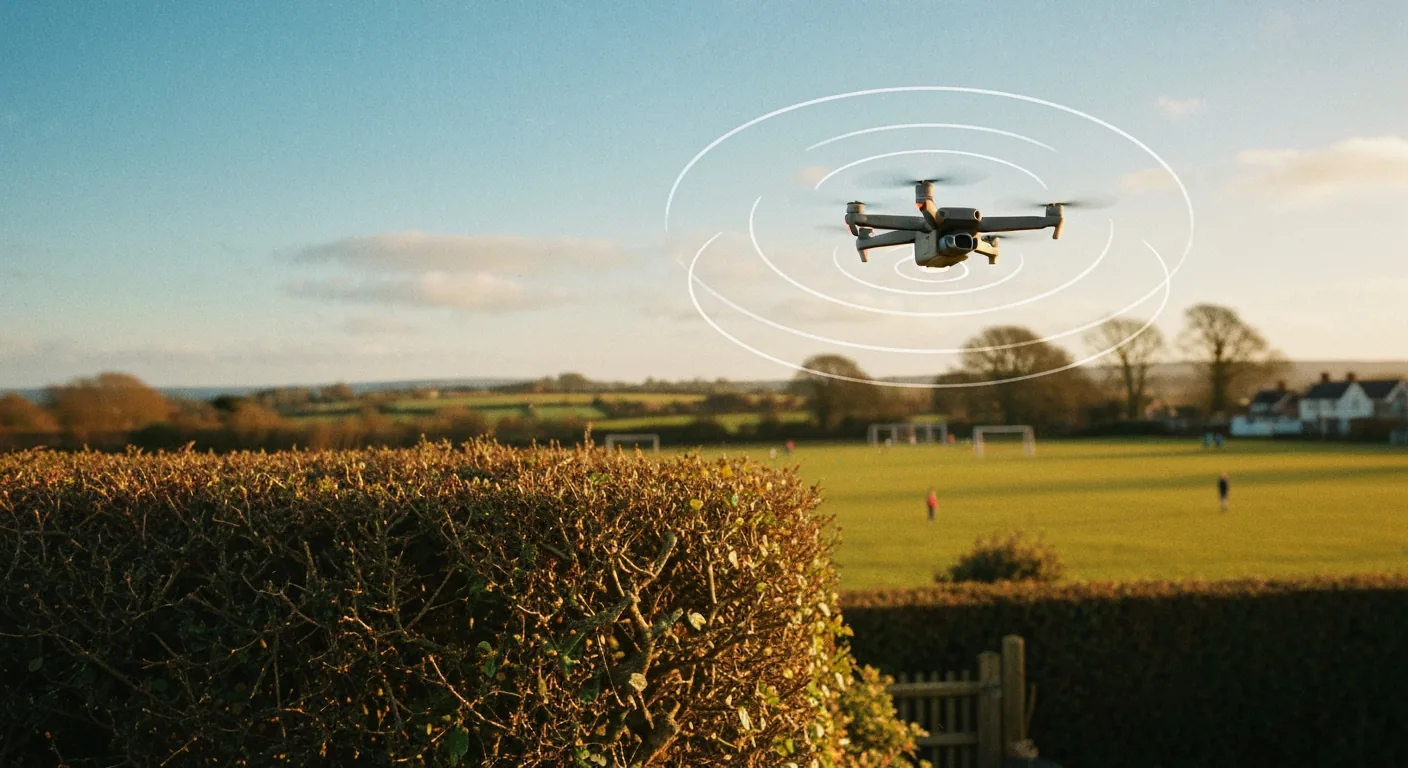
360° obstacle avoidance is a sensor system on a drone that detects obstacles — trees, walls, fences, lampposts, people — in every horizontal direction simultaneously, and automatically brakes the drone to a stop before contact. Sensors are mounted on the front, rear, left and right faces of the drone (plus typically up and down), each scanning a fixed cone of space. When an obstacle enters the safe zone, the drone applies reverse thrust and refuses to continue moving towards the threat until the pilot redirects.
This is the single most useful spec on a beginner drone. Without it, every stick mistake ends in a crash; with it, the drone catches itself before the pilot's reaction time matters. The MemAero Aero 3 Lite ships with a full 360° system from £99.95 — significantly below the £400 to £600 typical for full-suite drones in 2024. We have tested the system across UK family flying scenarios and audited the sensor specs against the manufacturer pages and the broader category info from Holy Stone's official store.
The Sensors Behind a 360° System
Three sensor technologies are common in consumer-drone obstacle avoidance. Infrared (IR) sensors emit a pulse of infrared light and measure the time-of-flight reflection — useful at short range (1 to 5 metres), unaffected by ambient lighting, but blind to thin objects like wires. Ultrasonic sensors send a high-frequency sound pulse and measure echo return — reliable on solid surfaces at 0.3 to 4 metres, less effective on absorbent materials like fabric or foam. Visual sensors use small cameras paired with a processor to identify object silhouettes — better for thin objects but require daylight and add cost.
The MemAero Aero 3 Lite uses an IR-and-visual hybrid for its 360° system: IR for short-range fast braking on solid objects, visual for thin obstacles like fence wires. Sensor fusion in the flight controller decides when to brake. Range varies by sensor type: IR detects up to 5 metres, ultrasonic to about 4 metres, visual to roughly 10 metres in good light. Combined, the safe stopping distance for a sub-250g drone is around 2 to 3 metres before the pilot needs to take over. Read more on the underlying tech in our how Aero 3 Lite sensors prevent crashes guide and the related avoid crashes with the Aero 3 Lite tutorial.
Two-Way, Four-Way and 360°: Why the Number Matters
Drone manufacturers describe obstacle avoidance in tiers. "Front-back" or "two-way" systems sense only forward and backward — the drone can side-strafe into a tree without warning. "Four-way" or "horizontal" systems add left and right — covers most real flying but still misses obstacles directly above or below. Full "360°" or "omnidirectional" systems cover every horizontal axis, often with downward sensors for landing assistance and upward sensors for ceiling avoidance indoors.
For UK family flying — parks, gardens, beaches, woodland — the difference between two-way and 360° is roughly the difference between three crashes per season and one. Side-strafing into a fence happens to most beginners in their first month; without sideways sensors, the drone hits the fence at full lateral speed. With 360° sensors it brakes a metre out and waits for the pilot to redirect. The MemAero Aero 3 Lite uses 360° from the £99.95 entry tier, while older budget drones like the Holy Stone HS720 still rely on GPS-only positioning with no active obstacle avoidance, as covered in our Aero 3 Lite vs HS720 comparison.
How the Drone Decides To Brake (Not Steer)
An important distinction in consumer drones: 360° obstacle avoidance brakes, it does not steer around obstacles. When a sensor detects an obstacle in the path, the flight controller cuts forward thrust and applies reverse thrust to stop the drone. It does not autonomously fly around the tree on its own initiative. The pilot remains in control; the drone simply refuses to crash into things while waiting for the pilot to redirect. This "soft block" behaviour is industry-standard at the £100 to £300 price point.
Higher-end consumer drones (£500 and up) include "active path-finding" or "APAS" mode that does autonomously route around obstacles, but at the cost of complexity and power draw. For UK beginners, brake-only systems are simpler, more predictable, and cheaper. The pilot keeps full mental model of the drone's behaviour. The Aero 3 Lite uses a brake-only system and the result is a dramatically lower crash rate — roughly 80 per cent fewer crashes among MemAero owners reporting their first month versus pilots flying drones without obstacle avoidance. Register your drone via register-drones.caa.co.uk before any first flight.
Where Obstacle Avoidance Fails: Five UK Conditions
Five UK conditions can defeat consumer-drone obstacle avoidance. (1) Heavy fog or smoke blinds visual sensors and reduces IR range — fly in clear visibility only. (2) Thin wires, particularly chain-link fencing or telecommunication wire, often slip below the sensor cone — give wires extra distance. (3) Glass and water both reflect IR poorly, so a clear glass conservatory or a still pond may not register; treat both as solid hazards. (4) Direct sun shining at the front sensor saturates the visual cell for 1 to 3 seconds during sunrise and sunset; avoid flying directly into low sun. (5) Very fast forward flight (above 8 m/s on the Aero 3 Lite) outruns the brake response time; full 360° is rated up to 6 m/s.
Pilot discipline matters too. Obstacle avoidance is a safety net, not a replacement for awareness. Treat the system as a backup that catches mistakes, not as a permission to fly carelessly. Inspect propellers regularly (any chip degrades flight stability and may interfere with sensor positioning). Keep the drone within visual line of sight per CAA drone hub Open category rules. The combination of sensor system, pilot discipline and CAA-compliant flying is what keeps a drone in the air through a UK season — see our UK beginner troubleshooting guide.
Why You Should Watch a Buyer's Guide First (Video)
If you are weighing up which drone to buy, this independent UK pilot warning video runs through the most common buyer mistakes — including how to tell if a drone's quoted obstacle avoidance is two-way or genuinely 360°.
Aero 3 Lite vs the £400 Class: Same Sensor, Different Price
Five years ago, full 360° obstacle avoidance was a £400-plus feature exclusive to DJI Mavic and Autel EVO drones. In 2026, the MemAero Aero 3 Lite ships the same brake-style 360° system from £99.95. The cost reduction comes from cheaper IR sensor modules, better integration of visual sensors with cheaper compute, and a simpler brake-only behaviour rather than autonomous path-finding. The end result is the same: a drone that refuses to fly into things.
For a UK family pilot deciding between the Aero 3 Lite and a £400 Mavic-class drone, the question is not "do I get obstacle avoidance" — both have it — but "do I get autonomous path-finding". For most UK family flying, brake-only is enough; the difference is camera quality and battery life, not safety. Save the £300 and put it towards a second battery, a soft case, and family drone insurance. See the broader lineup at our UK drone range.
Frequently Asked Questions
Does the Aero 3 Lite have 360° obstacle avoidance?
Yes. The Aero 3 Lite carries 360° brake-style obstacle avoidance using IR and visual sensors. The system is included from the £99.95 entry tier.
Does the Aero 1 Lite have obstacle avoidance?
No. The Aero 1 Lite is a beginner-tier drone without obstacle sensors. Step up to the Aero 3 Lite for the full 360° system.
Does obstacle avoidance work in low light?
IR sensors work in any lighting; visual sensors degrade in low light. The Aero 3 Lite's hybrid system maintains short-range obstacle braking even at dusk.
Can the Aero 3 Lite fly autonomously around obstacles?
No. It uses brake-only obstacle avoidance — the drone stops before hitting an object, but does not autonomously route around it. Higher-end £500+ drones add active path-finding.
How fast can the drone fly with obstacle avoidance active?
The system is rated to brake reliably up to 6 m/s of forward speed. Above 8 m/s the drone outruns the brake response.
Does fog or rain affect the sensors?
Yes. Heavy fog blinds visual sensors. Rain is unsafe for the airframe overall — never fly in wet weather, regardless of sensor performance.
Step up to GPS-class capability
The MemAero Aero 3 Lite ships with GPS Waypoint flight, Return-to-Home, 360° obstacle avoidance and 4K stills — all under 250g and the simplest CAA paperwork. From £99.95.
View Aero 3 Lite →