
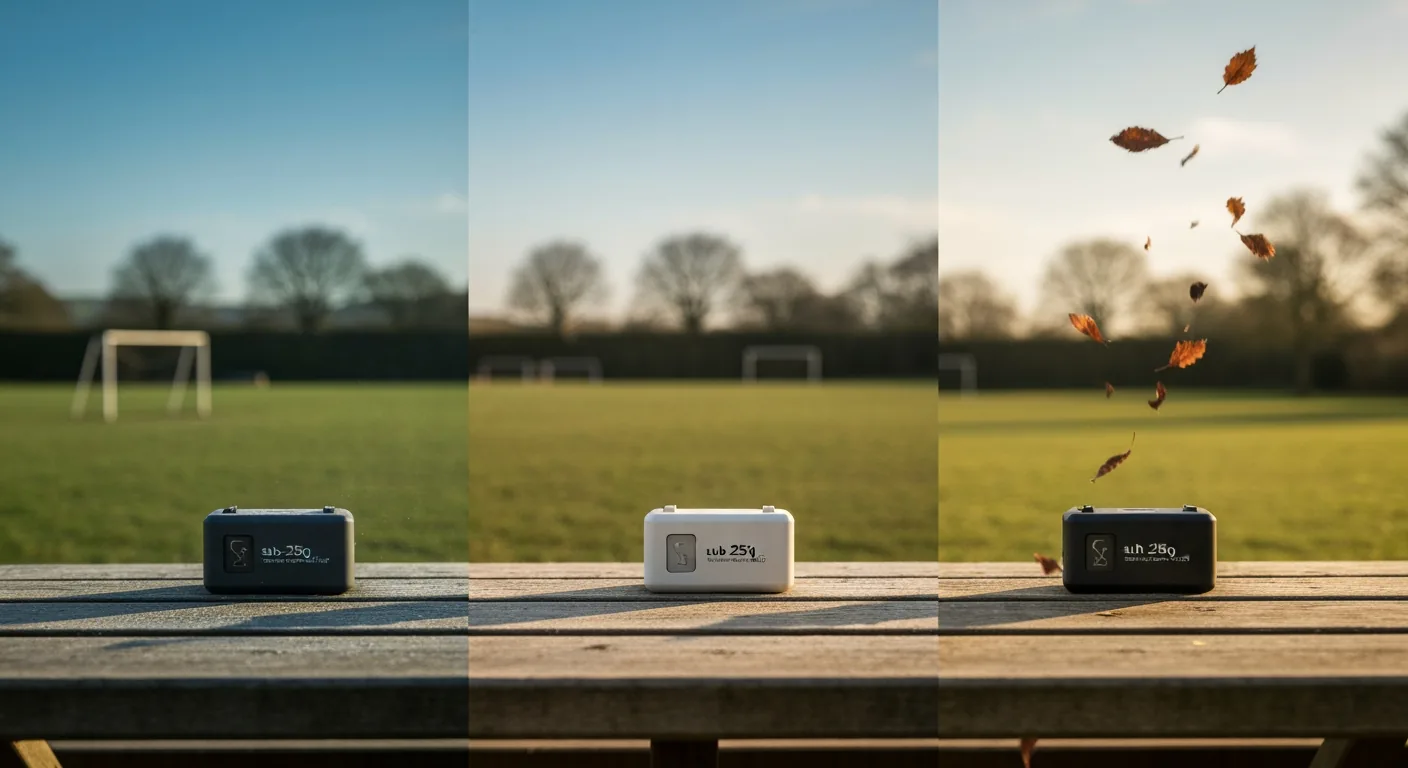
A typical sub-250g UK drone battery lasts 12 to 25 minutes per charge in calm conditions. Cold weather below 8°C cuts that by 20 to 30 per cent; flying into a 6 m/s headwind adds another 15 to 25 per cent loss. The MemAero Aero 1 Lite delivers around 12 to 15 minutes per battery and the Aero 3 Lite delivers up to 25 minutes per battery in calm summer conditions. Multi-battery bundles are the cheapest way to triple your session time without paying for more capacity per cell.
How Long Does a Drone Battery Last? Quick Answer
A drone battery for a UK sub-250g model lasts between 12 and 25 minutes per full charge in calm, mild conditions. The MemAero Aero 1 Lite delivers approximately 12 to 15 minutes per battery; the MemAero Aero 3 Lite reaches up to 25 minutes per battery in calm conditions. UK cold weather, headwind, aggressive throttle inputs and high-altitude flight all reduce that figure. The single biggest variable is temperature, not the spec sheet.
This article tests sub-250g drone batteries against the three real-world UK conditions that matter — temperature, wind, and pilot discipline. Numbers come from MemAero owner sessions plus manufacturer specifications confirmed against the Civil Aviation Authority drone hub. We do not pad the figures, and we name the temperature where each rating starts to slip.
UK Cold-Weather Flight Time: Real Numbers Below 8°C
Lithium-polymer drone batteries lose useable capacity in cold weather. Below 8°C, expect to lose 20 to 30 per cent of rated flight time. Below 4°C the loss can reach 40 per cent and the cells age faster after each cold flight. A drone rated for 25 minutes in calm summer conditions will deliver around 17 to 20 minutes on a typical UK winter morning, and a 12 to 15-minute drone may drop to 9 to 11 minutes per charge.
The fix is straightforward: warm the battery before flying. Keep batteries in an inside coat pocket while you walk to the launch site. Hand-warm them on the cold-weather days you cannot avoid. Never charge a battery straight out of a cold car — let it return to room temperature first to avoid damaging the cells. Land at 25 per cent rather than 15 per cent in winter; cold cells trip low-voltage cut-offs sooner than warm cells. We cover the full pre-flight regime in our Aero 1 Lite battery tips guide.
Warm and Calm: Why Your Best Flights Are Always In May
Drone batteries deliver close to their rated flight time when ambient temperature is between 15°C and 25°C, wind is under 3 m/s, and the drone hovers more than it sprints. Late spring and early autumn UK days are the sweet spot. The Aero 3 Lite reaches its full 25-minute rating in these conditions; the Aero 1 Lite lands close to 15 minutes; the lipo cells last more flight cycles before noticeably ageing.
Hovering uses about half the power of full forward flight, so a flight session that mixes hovering, slow waypoints, and short forward bursts will hit close to spec. Aggressive racing-style flight, fast climbs, and altitude-hold disabled will burn through a battery in 60 to 70 per cent of the rated time. Plan a typical UK family session for 12 minutes of useful flight per battery, regardless of the spec on the box. For tactical battery choice, see Aero 3 Lite features breakdown and our flight time optimisation tips.
Headwind Penalty: How Much Time Wind Costs You
Wind costs you flight time twice — first because the drone burns more current to hold position, and second because you fly more aggressively to fight drift. In a 4 m/s wind (the typical UK afternoon breeze) expect 10 to 15 per cent battery loss. At 6 m/s (gusty park conditions) the loss is 15 to 25 per cent and a 25-minute drone delivers around 19 to 21 minutes. At 8 m/s most sub-250g drones become unsafe and the battery will drop below recommended landing voltage in under 10 minutes.
The fix is wind-awareness, not battery upgrades. Check the wind at 10 metres altitude with an app like Windy before launching, not just the ground-level feel — the wind at flight altitude is usually higher than at the launch surface. Fly upwind at the start of the session and downwind on the way home, so the drone is fighting the lighter battery on the easier leg. The wind-test demonstration video below shows how visible this margin is in practice. Read more on this in our drone flight stability guide.
How To Extend Battery Life Without Buying More
Three habits add cumulative minutes per session without spending money. First, always warm the battery before flying — a battery at 18°C internal temperature delivers full rated capacity, while one at 6°C delivers 70 per cent. Second, hover more, sprint less — gentle inputs use about half the current of aggressive forward flight, so a session of patient circling beats a session of point-to-point chasing. Third, store batteries at storage charge (around 50 per cent) when not flying — leaving a battery full for weeks shortens its useful life by 10 to 20 cycles.
Beyond habits, two purchases add real session time. A multi-battery pack triples the flight session at roughly half the cost of a second drone. The MemAero Play Longer Pack on the Aero 1 Lite ships extra batteries and a charging hub for £69.95 — three back-to-back flights instead of one. The Aero 3 Lite Flight-Time Plus pack adds a second battery for the same purpose. Spare batteries are also available individually at MemAero. Avoid third-party batteries — non-OEM cells often deliver 80 per cent of rated capacity and void warranty.
Wind-Tested Drone Footage (Video)
If you want to see how a sub-250g class drone handles real wind, this 40 mph wind test from a UK pilot demonstrates how stability and battery drain track in gusty conditions and what the limits look like in flight.
Choosing a Drone for UK Flight Time, Not the Spec Sheet
The marketing rating on a box is for laboratory conditions: a 22°C still room, neutral wind, no aggressive inputs. Useful UK flight time is the spec rating multiplied by 0.7 to 0.85. A drone that promises 30 minutes will, in a normal UK afternoon, deliver about 22 minutes; a drone promising 15 minutes delivers about 11. Plan around the realistic figure, not the box.
For most UK families, the Aero 3 Lite is the right buy if flight time is a top-three priority — the 25-minute rating delivers a real-world 18 to 22 minutes per battery in shoulder seasons. For young pilots or back-garden sessions, the Aero 1 Lite's shorter session matched with the Play Longer Pack is the cheaper way to keep three children flying for an afternoon. Avoid drones that quote flight time without naming a temperature; the spec means nothing without the test conditions. For more on choosing models, see our Aero 1 vs Aero 3 ultimate comparison, register the operator at register-drones.caa.co.uk, and check spec confirmations on our drone range page.
Frequently Asked Questions
How long does a typical UK drone battery last?
For sub-250g recreational drones, expect 12 to 25 minutes per battery in calm, mild conditions. Cold and wind cut that figure substantially.
How long does the MemAero Aero 1 Lite battery last?
Approximately 12 to 15 minutes per battery in calm, warm conditions. The Play Longer Pack ships extra batteries for back-to-back sessions.
How long does the MemAero Aero 3 Lite battery last?
Up to 25 minutes per battery in calm conditions. The Flight-Time Plus pack adds a second battery for around 50 minutes of total session flight time.
Does cold weather really kill drone flight time?
Yes. Below 8°C expect 20 to 30 per cent capacity loss; below 4°C the loss can hit 40 per cent. Always warm the battery before launching in winter.
Can I extend my battery's lifespan?
Yes. Store at 50 per cent charge when idle, never charge straight from cold, and avoid running cells below 15 per cent during flight. These habits add 30 to 50 cycles of useful life.
Are third-party batteries safe to use?
We do not recommend them. Non-OEM cells often deliver less capacity, age faster, and may void warranty cover from manufacturers like MemAero or Holy Stone.
Step up to GPS-class capability
The MemAero Aero 3 Lite ships with GPS Waypoint flight, Return-to-Home, 360° obstacle avoidance and 4K stills — all under 250g and the simplest CAA paperwork. From £99.95.
View Aero 3 Lite →