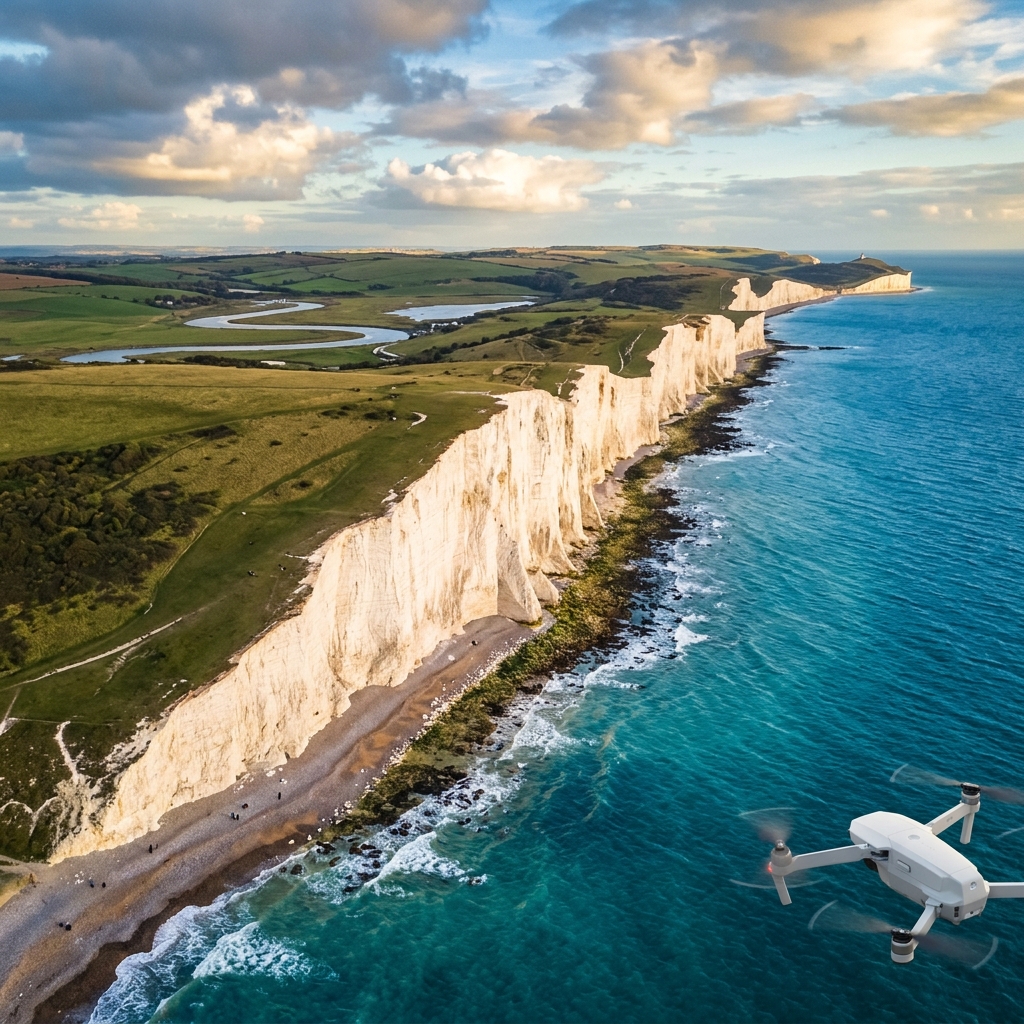
Aerial photography in the UK is accessible to anyone willing to learn the basics of drone operation. The barrier is no longer cost — it is knowing which drones are actually easy to fly and capable of producing usable images. For UK photographers and hobbyists, the combination of variable weather, CAA regulations, and changeable terrain makes ease-of-use a genuine priority, not a marketing afterthought. This guide covers what to look for, the practical UK-specific considerations, and the full spectrum of options — from straightforward GPS photo drones to the FPV route if you want to go further.
What Makes a Drone Easy for Photography
GPS position hold is the single most important feature for photography-focused flying. Without it, the pilot must constantly make small control inputs to maintain position while also framing shots — a difficult coordination task for beginners. GPS hold lets the drone sit still in the air, freeing the pilot to focus entirely on the composition.
Return-to-home is the safety net that makes confident exploration possible. When shooting in unfamiliar locations — clifftops, hilltops, open moorland — knowing the drone will return automatically if signal is lost removes significant anxiety from the process. Electronic image stabilisation or a gimbal reduces camera shake in the wind conditions common across the UK.
App connectivity with live FPV preview transforms the photography experience. Composing shots from the drone's perspective rather than estimating from the ground produces dramatically better results. Most consumer drones in the mid-price bracket offer this via a companion app. Camera resolution: 1080p is sufficient for social media and personal use; 4K is the right target for professional publication, large prints, or significant cropping flexibility.
UK-Specific Considerations for Aerial Photography
Wind is the primary adversary in UK aerial photography. Even a moderate breeze produces significant camera shake in a lightweight drone without adequate stabilisation. GPS and electronic image stabilisation compensate for gusts that would make filming impossible on a toy-grade model.
Coastal photography — arguably the most popular drone subject in the UK — introduces salt air, sea spray, and unpredictable updrafts. Consumer drones are not water-resistant. The practical rule is to stay 50 metres horizontal distance from the waterline and never fly into sea spray.
CAA rules for recreational aerial photography depend on weight. Drones under 100g require no CAA registration and no Flyer ID. Drones over 100g require a free CAA Operator ID and Flyer ID, both completed online. All recreational pilots must: maintain visual line of sight at all times, stay below 120 metres, keep away from airports and restricted airspace, and not film individuals without consent. Commercial aerial photography requires CAA authorisation regardless of drone weight.
Always verify airspace with the NATS Drone Assist app before flying anywhere unfamiliar. Restrictions change, and some areas near military installations or nature reserves have permanent restrictions not obvious from a standard map.
Timing and Light for UK Aerial Photography
The golden hour — approximately one hour after sunrise and one to two hours before sunset — produces the warmest, most directional light for aerial photography. UK light is often softer and more diffuse than in sunnier climates, which suits aerial landscape photography particularly well. Overcast conditions can work in favour of photographers seeking even, shadow-free coverage of large areas.
Avoid midday summer flying where possible. High contrast light creates harsh shadows in landscape shots and can cause exposure issues in automatic camera modes. Early morning weekend sessions also benefit from lower foot traffic in popular parks and coastal spots — practically important when maintaining required separation from people during flight.
Recommended Locations for Aerial Photography in the UK
Open farmland with public right of way access, coastal headlands away from beach crowds, and upland moorland are the best starting environments. These locations combine wide open airspace, minimal obstruction risk, and dramatic visual subjects. Urban aerial photography requires more care: buildings create wind turbulence that affects stability, and populated areas trigger additional CAA restrictions. Most photo drones are best used in open, rural environments until the pilot has sufficient experience to navigate more complex airspace.
The FPV Route for Aerial Creators
GPS photo drones are excellent tools for straightforward aerial stills and smooth panning video. But for creators who want more — dynamic movement, low-altitude runs, cinematic chase shots, or the kind of immersive first-person footage that GPS drones simply cannot produce — FPV is the natural next step.
FPV (first-person view) flying involves flying from the drone's perspective through a headset, with direct manual control. It produces a completely different quality of footage: fluid, kinetic, and highly cinematic when done well. The cinematic FPV style in particular has become the standard for high-end travel and brand content.
MemAero designs and builds FPV drones in Lancaster. The Aero 3 Lite has been succeeded by the all-new MemAero Aero 3 — a UK-made 7-inch FPV drone built specifically for creators and long-range explorers. It shoots 4K/120fps with DJI O4 video link, runs open ArduPilot firmware, and uses a shared sealed slide-in smart battery system with the Aero 2. It is not a sub-£100 GPS photo drone — it is a serious creative tool for pilots who want to produce footage that GPS drones cannot match.
Both drones are pre-launch and available via the waitlist. If FPV aerial work is the direction you want to go, read how to get started in FPV in the UK for the honest path from scratch.
MemAero has moved to UK-made FPV
The Aero 2 and Aero 3 are designed and built in Lancaster — programmable, repairable, and ownable. Founders pricing and a free spare battery for waitlist members.
Join the waitlist →Summary
Easy aerial photography drones in the UK require GPS stabilisation, a usable camera, and portability as minimum standards. DJI's Mini series sets the benchmark for GPS photo performance. For creators who want more than a GPS photo drone can deliver — dynamic footage, FPV perspective, true 4K cinematic capability — the MemAero Aero 3 is the UK-made step-up worth putting on your radar. Explore the full MemAero drone range to understand where it sits.
What is the easiest drone to use for aerial photography in the UK?
GPS-stabilised drones with position hold, return-to-home, and a live app preview are the most accessible for beginners. DJI's Mini series is the benchmark for GPS photo drones. For FPV aerial work, the learning curve is steeper but the creative ceiling is much higher.
Do I need a special licence for aerial photography in the UK?
Recreational aerial photography does not require a licence, but any drone over 100g needs a free CAA Operator ID and Flyer ID. Commercial aerial photography requires CAA authorisation regardless of drone weight. Taking the free CAA Flyer ID test is strongly recommended for all pilots.
What resolution do I need for aerial photography?
1080p is sufficient for social media and personal use. 4K is the right target for professional publication, large prints, or footage requiring significant cropping — and for cinematic FPV work where you want flexibility in post.
What time of day is best for UK drone photography?
Early morning (sunrise plus one hour) and late afternoon (two hours before sunset) provide the best light quality for UK aerial photography. Overcast conditions work well for even, shadow-free landscape coverage.
How does FPV aerial footage differ from GPS drone footage?
GPS drones produce smooth, stabilised footage ideal for panning shots and stills. FPV drones produce dynamic, kinetic footage from a first-person perspective — more immersive and cinematic for movement-based creative work. They require more skill to fly but offer far greater creative range.