

Drone Sensor Technology: Smarter Flights with A…
In This Article
- Drone sensor technology underpins autonomous navigation and precision control.
- GNSS and LiDAR provide foundational mapping and positional awareness.
- Ultrasonic sensors enhance safety in tight or GPS-denied environments.
- AI and machine learning enable adaptive decision-making and predictive analysis.
- Sensor fusion boosts redundancy, accuracy, and stability during complex missions.
- Industry applications range from agriculture and construction to emergency response.
- Choosing the right sensors requires balancing cost, accuracy, and operational goals.
- Future trends include miniaturisation, AI evolution, and sustainable sensor design.
How Drone Sensor Technology Works
Understanding the Core Components
At the heart of drone sensor technology lies a sophisticated ecosystem of devices working in synchronisation to enable unmanned aerial vehicles to fly autonomously, detect obstacles, gather data, and complete complex tasks in dynamic environments. These components typically include a combination of gyroscopes, accelerometers, magnetometers, GNSS modules, LiDAR, and visual sensors. Each sensor serves a unique role in defining the drone’s orientation, speed, altitude, and heading, ensuring optimal flight accuracy and safety.
For example, the inertial measurement unit (IMU), which combines gyroscopes and accelerometers, provides real-time data about the drone’s angular velocity and linear movement. This information enables the flight controller to maintain balance and respond rapidly to external forces like wind or uneven terrain. Coupled with GPS and barometric altimeters, drones can determine their position in three-dimensional space with impressive precision.
Drone sensor technology also includes visual processing systems based on monocular, stereoscopic, or thermal cameras. These sensors collect imagery which is processed either onboard using edge computing or offloaded to cloud systems for detailed analysis. Such processing allows for operations like inspection mapping, surveillance, and object detection. Together, this suite of sensors provides a comprehensive situational awareness platform.
The Role of GNSS and LiDAR in Navigation
High-Precision Mapping and Positioning
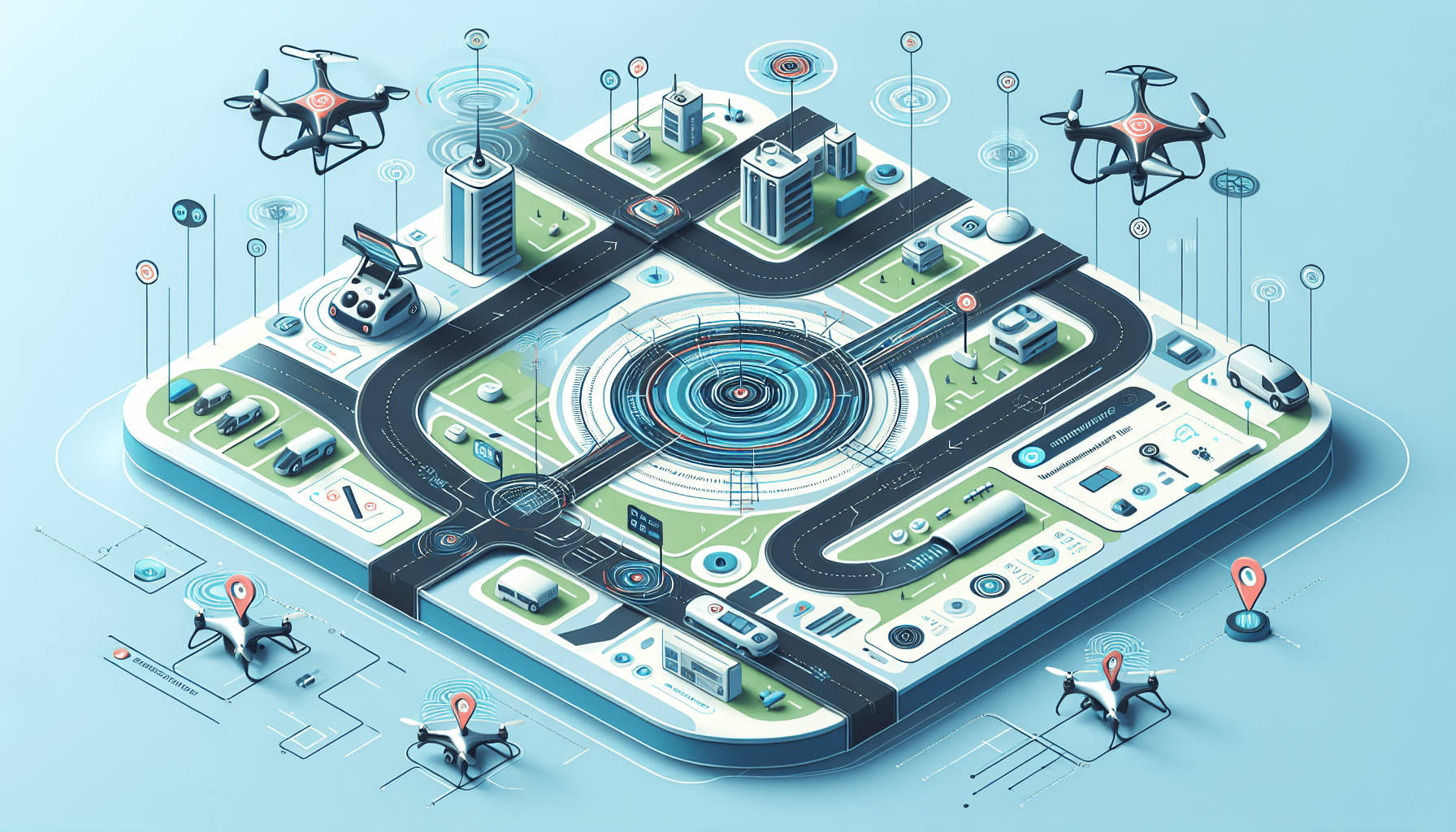
Global Navigation Satellite Systems (GNSS) such as GPS, GLONASS, Galileo, and BeiDou serve as the geospatial backbone of most professional drone operations. When integrated with Real-Time Kinematic (RTK) or Post-Processed Kinematic (PPK) correction methods, GNSS modules can provide centimetre-level accuracy. This level of exactitude is essential for industries like surveying, construction, and precision agriculture.
Meanwhile, Light Detection and Ranging (LiDAR) sensors emit rapid pulses of laser light that bounce off surfaces and return to the sensor. By calculating the time it takes for each pulse to return, drones can generate ultra-detailed 3D models of landscapes and structures. Due to its independence from ambient light and its ability to penetrate foliage, LiDAR is often favoured in forestry assessments and archaeological projects.
Combining GNSS with LiDAR results in a powerful navigation duo. While GNSS provides positioning, LiDAR offers spatial awareness. This synergy enables drones to fly pre-programmed routes precisely while dynamically updating their understanding of the terrain below. The reliability and accuracy of this drone sensor technology underscore its central role in modern UAV deployment strategies. Learn more about Advanced Drone Technology
Ultrasonic Sensors: Close-Proximity Awareness
Enhancing Safety in Tight Environments
Ultrasonic sensors play a critical but sometimes overlooked role in drone sensor technology. These sensors emit high-frequency sound waves and measure the time it takes for the echoes to return. Functionally similar to sonar, ultrasonic sensors are particularly effective for short-range object detection, making them ideal for tasks that require precise positioning in confined or indoor environments.
In environments such as warehouses, indoor farms, or narrow alleys, drones may not receive strong GNSS signals. Ultrasonic sensors bridge this gap by accurately reading distances to nearby walls, ceilings, and floors. This allows drones to stabilise themselves and avoid collisions during inspection or delivery missions.
Moreover, integrating data from ultrasonic sensors with readings from optical flow and IMU systems enables superior close-range navigation. This multi-sensor approach ensures redundancy and resilience, which are vital when UAVs must operate in spaces where human safety and asset integrity are paramount.
AI and Machine Learning Integration
Smarter, Autonomous Decision-Making
The integration of artificial intelligence (AI) and machine learning (ML) algorithms with drone sensor technology has significantly expanded the autonomous capabilities of UAVs. Modern drones can now interpret data in real time to make intelligent flight decisions, adapt to environmental changes, and execute pre-defined missions with minimal human intervention.
Machine learning models are trained on enormous datasets comprising sensor readings from thousands of flight hours. These models help drones identify patterns, recognise obstacles, and refine flight trajectories. For instance, AI can help differentiate between dynamic and static objects, thereby optimising obstacle avoidance paths without frequent manual overrides.
Additionally, AI-powered drones are making a mark in predictive maintenance. By analysing sensor data trends, drones can forecast potential component failures or detect anomalies in infrastructure like power lines or pipelines. This forward-looking application not only reduces operational downtime but also enhances overall mission safety. Read the Ultimate Guide to Autonomous Drones
Dynamic Obstacle Avoidance
Navigating Real-Time Threats and Challenges
Dynamic obstacle avoidance is one of the most vital functions enabled by advanced drone sensor technology. Unlike static route-following, real-world missions often involve unpredictable elements such as birds, pedestrians, vehicles, or sudden weather changes. To overcome these obstacles, drones must be capable of reacting instantaneously.
This capability is powered by a combination of sensors including LiDAR, stereo vision cameras, radar, and ultrasonic devices. These sensors constantly scan the drone’s surrounding environment and create a three-dimensional map in real time. Algorithms then calculate the safest route around identified hazards, often within milliseconds.
Notably, tech advancements are pushing the boundaries of what’s possible. For example, collision-avoidance protocols now allow multiple drones to fly in swarms or fleets without risk of mid-air collisions. Such cooperatively-aware systems rely heavily on sensor mesh networks, which offer unified situational awareness across all units involved.
How Advanced Cameras Support Visual Navigation
Capturing and Analysing Visual Data
Advanced cameras are a cornerstone of aerial visual navigation, enabling drones to perceive and interpret visual information similarly to how humans use their eyes. Employing high-resolution RGB cameras, infrared sensors, or multi-spectrum imaging, modern UAVs can map terrain, identify objects, and conduct detailed inspections.
Visual sensors are frequently used in conjunction with simultaneous localisation and mapping (SLAM) algorithms. With SLAM, drones can construct real-time visual maps of unfamiliar environments while pinpointing their precise location within them. This is particularly beneficial in GPS-denied areas such as underground mines or dense urban zones.
Thermal and multispectral imagery also play an essential role, especially in agriculture, firefighting, and search-and-rescue operations. These sensors detect heat signatures and plant health variations unnoticeable to the naked eye, giving operators valuable insights for quick decision-making on the ground. Read a related article
Benefits of Sensor Fusion in Drones
Improving Flight Stability and Control
Sensor fusion refers to the practice of combining data from multiple types of sensors to produce a more accurate, reliable, and comprehensive output than any single sensor could achieve alone. For drone sensor technology, this results in enhanced navigation, obstacle detection, and operational stability.
By integrating readings from the IMU, GNSS, barometer, LiDAR, visual cameras, and more, drones can filter out inaccuracies and compensate for the shortcomings of individual sensors. For example, if a GPS signal weakens due to interference, onboard SLAM systems complemented by proximity sensors can help the drone continue its mission uninterrupted.
This redundancy and cross-verification not only reduce the risk of navigational failure but also improve the drone’s ability to execute complex manoeuvres. In practical scenarios, such as automated package delivery or cinematic filming, such precision is indispensable for quality and safety.
Applications in Different Industries
From Agriculture to Search and Rescue
The versatility of drone sensor technology has facilitated its adoption across a wide spectrum of industries. In agriculture, multispectral and thermal sensors assist in crop monitoring, irrigation planning, and disease detection. These techniques result in yield optimisation and cost-effective resource allocation. In construction and surveying, drones equipped with RTK GNSS and LiDAR allow for fast, accurate site mapping and progress tracking.
Emergency services leverage drone sensors for real-time situational awareness during wildfires, floods, or high-risk search-and-rescue missions. Thermal cameras can detect lost individuals under thick foliage or smoke, while LiDAR can produce 3D layouts of disaster-stricken areas to guide response teams effectively.
Additionally, the oil and gas sector relies on drone technology for pipeline monitoring, leak detection, and rig inspection. By reducing the need for manual intervention, organisations enhance efficiency while significantly improving worker safety.
Choosing the Right Sensors for Your Needs
Factors to Consider: Budget, Use Case, Accuracy
Selecting the appropriate sensors for your drone application depends heavily on the intended use, required accuracy, and budget constraints. Professional-grade LiDAR systems provide unmatched terrain mapping but can be prohibitively expensive. In contrast, visual camera modules or basic ultrasonic sensors may suffice for indoor diagnostics or basic obstacle avoidance.
Industries requiring high precision should prioritise GNSS with RTK or PPK capabilities, while those focused on environmental condition monitoring may benefit more from environmental and spectral sensors. Operational environment—urban, rural, indoor, or natural—must also be taken into account when choosing sensor payloads.
Ultimately, aligning your sensor package with mission objectives ensures optimal performance. Emerging modular systems allow users to swap sensor units based on specific needs, offering cost efficiency and operational flexibility.
Future Trends in Drone Sensor Technology
What to Expect in the Next Decade
As drone sensor technology continues evolving, several trends are poised to shape the sector’s future. Miniaturisation of high-performance sensors is enabling lighter UAVs without compromising capability. This opens the door for broader applications in healthcare, logistics, and consumer sectors.
5G and satellite-based communications will enhance real-time sensor data transmission and pave the way for true beyond-visual-line-of-sight (BVLOS) operations. Advanced AI models will allow drones to make split-second judgments using contextual data drawn from multiple sensors simultaneously.
Increased emphasis on sustainability may also drive the development of eco-friendly sensor technologies with lower power consumption and recyclable materials. With these developments, drone sensor technology will play a pivotal role in shaping smart cities, environmental conservation, and efficient infrastructure management.
“Drone sensor technology is not just about flight—it’s about understanding, predicting, and interacting meaningfully with the world around us.”
Conclusion: Smarter Navigation, Safer Flights
Drone sensor technology has evolved into a cornerstone of modern UAV functionality, enabling smarter navigation, improved autonomy, and an expanded range of applications across many industries. By fusing data from GNSS, LiDAR, ultrasonic, and visual sensors, drones can interpret and interact with their environment with remarkable sophistication.
Looking ahead, AI and sensor fusion will drive further innovation, improving scalability and safety. Whether you’re operating in agriculture, search and rescue, construction, or logistics, adopting the right sensor blend can enhance mission success and operational efficiency. As this technology matures, keeping abreast of emerging trends and capabilities will be critical for stakeholders and enthusiasts alike.
Great guide on navigating-with-drones-understanding-advanced-sensor-technology – Community Feedback
What advanced sensors are used in drone navigation?
Modern drones use a combination of GNSS (GPS, GLONASS), LiDAR, ultrasonic sensors, and advanced cameras for navigation and obstacle avoidance.
How do AI and machine learning improve drone navigation?
AI and ML allow drones to adapt to real-time data, optimize flight paths, and enhance autonomous decision-making, resulting in safer and more efficient operations.
What is dynamic obstacle avoidance in drones?
Dynamic obstacle avoidance enables drones to detect and avoid moving and stationary objects in real time using advanced sensors and algorithms.